Pool covers improve energy efficiency primarily by acting as an insulating barrier that minimizes heat loss through evaporation, reducing heating costs by 50%–70%.
Most pool owners focus on chemicals, filtration, and equipment when trying to lower their operating costs. The pool cover often gets overlooked, yet it addresses the single biggest source of energy loss: evaporation.
An uncovered pool loses between a quarter and half an inch of water every day. Reheating that lost water is where a large portion of your energy bill goes. At TurnKey Pool Designers, we see this come up constantly when homeowners ask how to make their pools more affordable to run year-round.
Contact us today to find the right cover for your pool.
Pool covers save energy by blocking the four main ways a pool loses heat, water, and chemicals between uses.
Evaporation is responsible for most of a pool’s heat loss, not the air temperature around it. When water evaporates, it carries heat with it. A single pound of water evaporating at 80°F removes roughly 1,048 BTUs of energy from your pool. A fitted cover reduces evaporation by up to 95%, which directly lowers how much your heater has to run.
Even on mild nights, an uncovered pool can drop up to 5 degrees Fahrenheit in temperature. Over a week of leaving the pool uncovered overnight, that adds up to a significant heating load. A thermal cover holds that heat in, reducing overnight heat loss by up to 70% and keeping the water at a more consistent temperature day to day.
Chlorine and other pool chemicals don’t just get used up; they also evaporate along with the water. A cover slows that process, which means your water stays balanced longer and you spend less on chemical top-ups. This is one of the quieter savings that pool covers deliver but adds up noticeably over a season.
Leaves, dirt, insects, and other debris that enter an uncovered pool force your pump and filter to work harder and longer. A cover keeps the pool cleaner between uses, which reduces the energy your filtration system draws and cuts down the time spent on manual cleaning.
Not all pool covers are built for the same purpose. The four most common energy-efficient options each handle heat retention and evaporation differently.
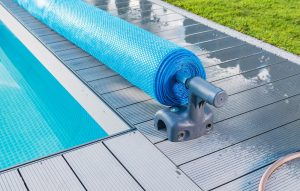
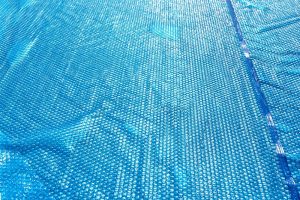 Solar covers (also called bubble covers) float directly on the water’s surface and are designed to capture heat from sunlight during the day. They can raise water temperature by 10 to 15 degrees Fahrenheit and cut evaporation by up to 95%. Solar covers are lightweight and affordable, making them one of the most accessible options. The main tradeoff is that they require manual removal before swimming and need to be rinsed and stored properly to extend their lifespan.
Thermal blankets are thicker than solar covers and made from multi-layered polyethylene or vinyl. Their primary job is overnight heat retention rather than solar gain. A quality thermal blanket can reduce heating costs by 50% to 70%, making them a strong choice for pools that are used frequently in the evenings or in regions with cooler nights. They do take more effort to put on and remove than lighter covers.
Automatic covers run on a motorized track system and open or close at the push of a button. They reduce evaporation and heating costs similarly to other cover types, but the key advantage is convenience. Because they’re so easy to use, most homeowners actually cover their pool every single day.
Consistent daily use compounds the savings. Automatic covers also add a safety layer by restricting pool access. The upfront cost is higher, but the durability and daily ease make them a solid long-term investment. Track systems should be professionally inspected every two years.
Security covers are made from heavy-duty mesh or solid vinyl and are primarily designed for homes with children or pets. They still deliver meaningful energy savings by reducing heat loss and chemical evaporation, and they keep debris out of the water. Installation and removal take more time and effort than other cover types, but the combination of safety and efficiency makes them a practical choice for many families.
Getting the most out of your pool cover comes down to three things: fit, consistency, and cleanliness.
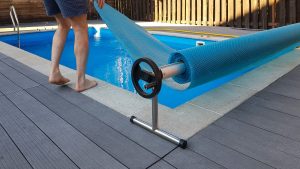 Proper Fit: Off-the-shelf covers work well for standard rectangular pools, but freeform, kidney-shaped, and custom pools need a fitted cover that matches their exact dimensions. Any gap allows heat and moisture to escape, and a snug fit is what delivers the full 70% heating cost reduction.
Pool covers are one of the most cost-effective upgrades available to pool owners. They don’t require changes to your equipment, your routine, or how you enjoy your pool. It just takes the habit of covering it when it isn’t in use.
If you’re ready to find the right cover for your backyard, the team at TurnKey Pool Designers is happy to help. Call us at (504) 386-3724 to get started.
A quality pool cover can reduce heating costs by up to 70%, depending on the cover type and how consistently you use it. Thermal blankets and automatic covers deliver the strongest heat retention. Solar covers perform best for daytime heating. Using any cover daily, rather than occasionally, is what drives the biggest reduction in monthly energy costs.
Solar covers and thermal blankets are the most energy-efficient options for most homeowners. Solar covers are best for capturing daytime heat and can raise water temperature by 10 to 15 degrees Fahrenheit. Thermal blankets focus on overnight insulation and can reduce heating costs by 50% to 70%. The better choice depends on whether your main concern is daytime heating or overnight heat retention.
An uncovered pool loses between a quarter and half an inch of water daily through evaporation. Over a week that adds up to several inches, enough to increase your water bill noticeably and force your heater to work harder. A properly fitted cover reduces that daily water loss by up to 95%.
Yes. A thermal or solar cover prevents the overnight heat loss that makes pool water too cold to swim in during shoulder seasons. Depending on your climate, the right cover can extend your usable swimming season by up to three months, allowing you to start earlier in spring and continue later into fall.
For homeowners who swim regularly, automatic covers are worth the investment. The push-button convenience means the cover actually gets used every day, which maximizes energy and chemical savings over time. Motorized track systems are built for durability and require only a professional electrical inspection every two years to keep running reliably.
Yes, significantly. A cover that doesn’t fully match the shape of your pool leaves gaps where heat and water vapor continue to escape. Custom-fit covers are especially important for non-rectangular pools. A snug fit is what allows a cover to reach its maximum savings potential, typically up to 70% in heating cost reduction.
Rinse your cover regularly with mild soap and water to prevent dirt buildup and maintain solar absorption on bubble-style covers. Store it correctly when removed to avoid cracking or tearing. For automatic covers, schedule a professional inspection of the track and electrical system every two years. A well-maintained cover lasts longer and continues delivering the energy and chemical savings it was designed for.


 TurnKey Pool Designers