Selecting the right pool pump in New Orleans involves calculating your pool’s volume to ensure it turns over all water within 8–10 hours, usually requiring a flow rate of 25–31 GPM for a 15,000-gallon pool. Due to hot, humid, and debris-heavy conditions, consider a slightly larger, high-efficiency variable speed pump, while ensuring it matches your filter’s maximum flow rate to avoid equipment damage.
A pool pump is the engine behind everything from clean water to effective filtration. Get the size right and your pool runs efficiently with minimal effort. Get it wrong and you are either dealing with cloudy water from under-circulation or sky-high energy bills from a pump working harder than it needs to. Most pool problems trace back to improper pump sizing, not poor maintenance habits.
At TurnKey Pool Designers, we factor pump selection into every New Orleans pool design and renovation project from the start. With years of experience building pools across New Orleans and the surrounding parishes, our team knows that matching the pump to the pool is one of the most important decisions in the entire build.
If you are starting a new pool or upgrading an existing system, call us at (504) 386-3724 for a free estimate.
Why Does Pool Pump Size Matter for New Orleans Pools?
Pool pump size directly determines whether your water gets filtered properly. An undersized pump cannot complete a full turnover in the recommended time, leaving contaminants in the water. An oversized pump forces water through your plumbing faster than the pipes and filter are designed to handle, causing wear, pressure damage, and unnecessary energy costs.
The Cost of Getting It Wrong
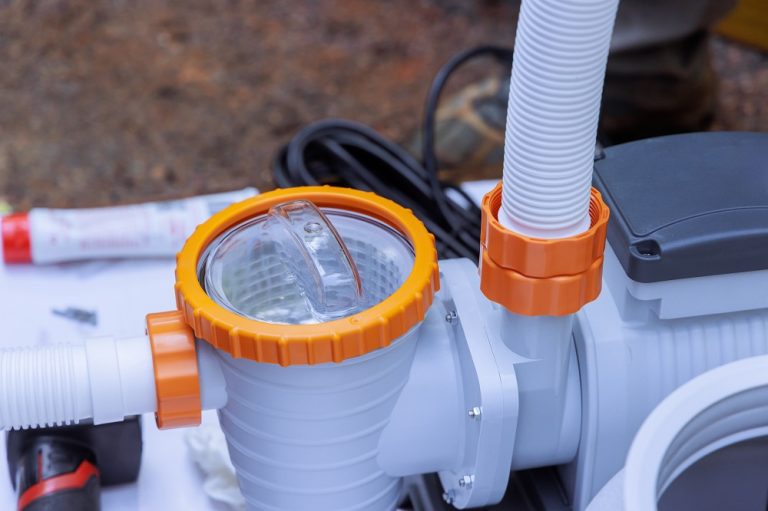 An oversized pump is one of the most common mistakes in New Orleans pool installations. It creates excessive velocity in the pipes, strains the filter media, and runs at higher energy consumption than your pool actually requires. Homeowners often assume bigger means better, but a pump rated far above your system’s needs is simply wasting money every time it runs.
Horsepower Is Not the Only Number That Matters
Many pool owners focus on horsepower when shopping for a pump, but GPM (gallons per minute) is the more useful number. Horsepower tells you how much power the motor uses. GPM tells you how much water it actually moves. Two pumps with the same horsepower rating can have significantly different GPM outputs depending on their design. Always size by GPM first, then match horsepower.
How Do You Calculate the Right GPM for a Pool in New Orleans?
The calculation is straightforward once you know your pool’s volume. For a rectangular pool, multiply length by width by average depth by 7.5 to get gallons. For irregular or freeform shapes, your pool contractor can provide the volume at the design or build stage.
Step-by-Step GPM Calculation
These figures give you the floor. Your pump should meet or exceed this number at normal operating conditions.
Account for Additional Equipment
If your pool has a spa, water features such as waterfalls or deck jets, or a pressure-side cleaner that runs without a dedicated booster pump, add their flow requirements to your baseline GPM. Spas and water features in particular can add significantly to the required flow rate. Failing to account for this leads to a pump that meets basic filtration needs but cannot adequately power the features you paid to install.
What Is Total Dynamic Head and Why Does It Affect Pump Selection?
Every pump has a performance curve that shows how its GPM output changes as resistance increases. A pump might deliver 80 GPM at low resistance but only 50 GPM at 60 feet of TDH. If you size the pump based on its peak flow rating without accounting for your system’s actual resistance, you may end up with a pump that cannot deliver the flow rate you calculated.
Pipe Size Sets a Hard Limit
Your plumbing sets a maximum flow rate that the pump cannot safely exceed. A 1.5-inch PVC pipe handles a maximum of 44 GPM per line. A 2-inch pipe handles up to 73 GPM. If your pool needs 70 GPM but your suction lines are 1.5-inch, you have two options: upgrade the plumbing or split the flow across two separate lines.
Exceeding the pipe’s capacity causes cavitation, where the pump starves for water and generates air pockets that damage the impeller. This is one of the more expensive failure modes in pool equipment and one that proper sizing prevents entirely.
Should You Choose a Single-Speed or Variable-Speed Pump?
Single-speed pumps run at full power whenever they are on. They are less expensive upfront but more expensive to operate because they cannot throttle down during low-demand periods like overnight filtration runs.
How Variable-Speed Pumps Work
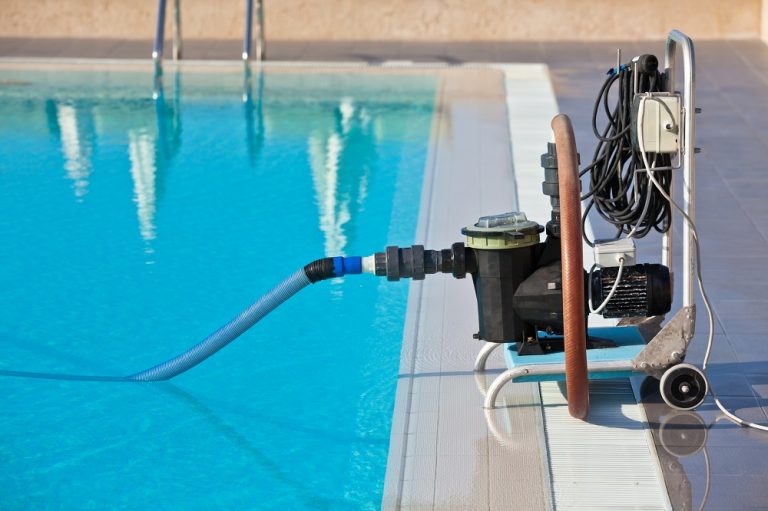 Variable-speed pumps let you program different speeds for different tasks. Slow speeds handle routine filtration at a fraction of the energy cost. Higher speeds run water features, spa jets, or pressure cleaners. The result is a system that operates at exactly the flow rate each task requires rather than running at maximum output all the time.
Long-Term Value for New Orleans Homeowners
Pool pumps in New Orleans run more months of the year than in most of the country, which makes energy efficiency a more significant factor than in colder climates. A variable-speed pump running longer at lower speeds delivers better water circulation and filtration than a single-speed pump running briefly at full blast, and it does so at a lower annual operating cost.
What Happens If Your New Orleans Pool Pump Is the Wrong Size?
The signs of improper pump sizing include persistent cloudiness despite balanced chemistry, algae appearing in corners or on steps, unusually high electricity bills, noisy pump operation, and frequent filter backwashing. If your current pool exhibits any of these, a pump sizing review is a reasonable starting point.
A New Orleans pool remodel or pool renovation in New Orleans project is a natural opportunity to correct equipment sizing that may have been wrong from the original installation. Updating the pump during a renovation costs less than replacing it as a standalone project and ensures the new equipment matches the rest of the system.
Work With a Professional Pool Designer in New Orleans
Choosing a pump is one part math, one part understanding how all the components interact. The GPM calculation is straightforward, but matching that flow rate to your specific TDH, plumbing configuration, filtration system, and water features takes hands-on experience with real systems.
TurnKey Pool Designers handles pump selection as part of every custom pool design in New Orleans project, ensuring the equipment spec matches the build from the ground up.
Schedule a free pool estimate in New Orleans today. Call (504) 386-3724.