Table of Contents:
- Key Takeaways
- How Pool Covers Improve Energy Efficiency
- a. Evaporation Barrier
- b. Thermal Insulation
- c. Chemical Retention
- d. Debris Prevention
- Choosing Your Energy Saver
- Solar Covers
- Thermal Blankets
- Automatic Covers
- Safety Covers
- Maximizing Cover Performance
- Proper Fit
- Consistent Use
- Routine Cleaning
- Maximize Your Pool Cover By Choosing An Efficient One
Pool covers help limit heat transfer and evaporation, keeping pools warmer for longer while cutting energy use and maintenance costs. They also reduce strain on filtration systems by keeping debris out, resulting in long-term savings and promoting environmentally responsible pool care.
For pool covers, contact us at TurnKey Pool Designers — we’ll help you find the right option for your space.
Key Takeaways
- As an evaporation barrier, pool covers save significant amounts of water and the energy required to reheat the pool, helping lower overall utility costs.
- Thermal insulation keeps the heat in the water, minimizing heating needs and maintaining a consistently comfortable temperature.
- Pool covers also reduce chemical loss from evaporation, preserving water balance and cutting down on maintenance time and expenses.
- By keeping debris out, covers lessen strain on filtration systems, saving both energy and cleaning effort while keeping the pool more inviting.
- Solar, thermal blankets, automatic, and safety covers each offer these benefits, with the best choice depending on your climate, budget, and pool usage. To maximize energy efficiency, make sure your cover fits properly, use it regularly, and keep it clean to extend its lifespan.
How Pool Covers Improve Energy Efficiency

Pool covers and energy efficiency. They combat the typical energy loss and water loss in every other way. Let’s look into four different ways in which pool covers can aid efficiency:
1. Evaporation Barrier
A pool without a cover can lose around a quarter inch of water per day, which increases energy costs for reheating. The right pool cover can cut evaporation by up to 95%, helping conserve water, reduce heating needs, and lower chemical expenses.
2. Thermal Insulation
Pool covers help maintain a steady water temperature by reducing overnight heat loss. They minimize temperature drops and keep the pool comfortable for longer, effectively extending the swimming season—especially in cooler areas.
3. Chemical Retention
Covers prevent evaporation of chemicals, which keeps water balanced and reduces the use of chemical changeovers. It saves money as well as being more damage-reducing to the environment.
4. Debris Prevention
Covers for swimming pools ensure leaves and dirt do not enter the swimming pool; thus, the burden on filtration systems is reduced. Cleaner water means less energy use with pumps and filters, resulting in further energy savings and easy maintenance.
Choosing Your Energy Saver

Whether above-ground or in-ground, a pool deserves the proper cover to make the entire experience more energy-efficient and cost-effective with upkeep. So many different types of pool covers, and each one is suited to a particular set of conditions.
-
Solar Covers
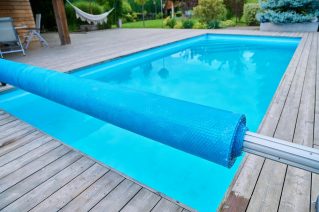
These covers are either called solar covers or bubble covers, and they are not heavy, floating over the top of the water. They are used for capturing solar heat to further raise the water temperature by up to 8-10 degrees Celsius and cut the heating costs. Solar covers capture heat and help conserve both water and chemicals, keeping your pool warmer naturally. These need to be cleaned and stored properly regularly.
-
Thermal Blankets
-
Automatic Covers
For very easy-to-use and ultra-efficient automatic covers, use the much-touted vinyl as a material. Operated using a button, these covers also minimize evaporation and heating costs while adding safety by restricting access to water. Their high initial purchase price may deter entry into ownership, but it usually pays for itself because of the durability and convenience of use. Regular maintenance of the track system is essential.
-
Security Covers
While recognizing features of safety, these covers are energy-efficient. Strong mesh or solid vinyl covers are especially important for homes with children or pets. These keep heating and chemical bills down and prevent debris from getting into the pool. Usually, these can take more time and effort to install and take off, but multipurpose returns have a reward of mind and long-term savings.
Maximizing Cover Performance
Pool covers are needed because they prevent energy leakage in liquids and prevent evaporation, as well as lessen necessary maintenance. This implementation is best done under consideration of the provision of appropriate fit, wearing it regularly, and keeping it clean.
Proper Fit
To get an optimal performance, snug covering is needed. It leaves room for heat and water to escape, and thus matters little in the way of energy savings. By custom-fitting, it can be best supplemented, especially for unusually formed pools. Custom covers fit both your climate and the shape of your pool very well. The clear bubble covers would be the preferred insulation against sunlight and cut down heat loss for sunny areas, whereas opaque covers would be considered better for cooler regions. Up to 70 percent savings by fit-tightening can be achieved on heating expenses.
Consistent Use
Leave your pool covered when it isn’t in use to limit evaporation. A single pound of water at 80°F evaporated can waste 1,048 Btu of heat. Regularly covering your pool can cut evaporation by up to 90%, resulting in huge savings. Clear covers are best for heating purposes in the daytime. Automatic covers make daily use easy, safe, and may lower insurance rates.
Routine Cleaning
A dirty cover can prevent solar absorption and also trap debris. Regular rinses with mild soap and water are necessary to keep covers effective and to lengthen their useful life. Automatic covers should be checked by a professional for electrical checks every two years, so that they will not malfunction. Replacing neglected covers costs more; simple maintenance keeps your investment efficient and conserves energy and chemicals, up to 70%.
Maximize Your Pool Cover By Choosing An Efficient One
Pool covers are much more than just barriers to debris; they trap heat, moisture, and energy. A quality cover costs less to operate, protects your pool investment, and helps preserve the environment. The right choice could be a solar cover, automatic system, or thermal blanket, depending on your needs.
With proper use and care, you can maximize these benefits and enjoy a beautiful, sustainable, and efficient pool. Talk to us at TurnKey Pool Designers to get expert advice and find the best options for your pool today.