Louisiana pools need design that accounts for soil because much of the ground here is soft, wet and prone to settling over time. A pool, its deck and its plumbing can each move differently if that is ignored. Designing for the soil from the start is what keeps a pool level, sealed and good-looking for decades.
Key Takeaways
- Soft, moisture-rich soil is common in South Louisiana and it moves over time.
- The pool shell, the deck and the plumbing respond to ground movement differently.
- A soil assessment tells the designer what support the pool needs.
- Joints, drainage and steady moisture around the pool limit visible movement.
- Small early signs are worth reporting before they grow.
The ground in South Louisiana is younger and softer than in most of the country. Homeowners see it in sinking driveways and gaps under steps. A pool has to live in the same ground. TurnKey Pool Designers works across the New Orleans metro, the Northshore and Baton Rouge, and soil is one of the first things considered on any project.
This guide explains why the ground moves and what a design does about it. It stays out of engineering figures, which belong in a report for your specific lot.
Why Does the Ground Move in South Louisiana?
The soil holds a lot of water and organic material, so it compresses under load and shrinks or swells as moisture changes. Over the years, that shows up as settling.
Conditions vary street to street and sometimes across a single yard. Land that was filled, drained or built on before can behave differently from untouched ground next door.
How Does Soil Movement Affect a Pool?
The pool shell, the deck around it and the pipes beneath can move at different rates, and problems appear where they meet. The shell is usually the most stable part.
A deck that settles while the pool stays put opens a gap at the coping or creates a lip underfoot. Pipes can be strained where they pass from moving ground to the fixed shell. In more serious cases a pool can go slightly out of level, visible as an uneven waterline against the tile.
Homeowners in Baton Rouge and those nearer the coast see different soils, and the principle is the same: the design has to suit the ground that is there.
What Does a Designer Do About It?
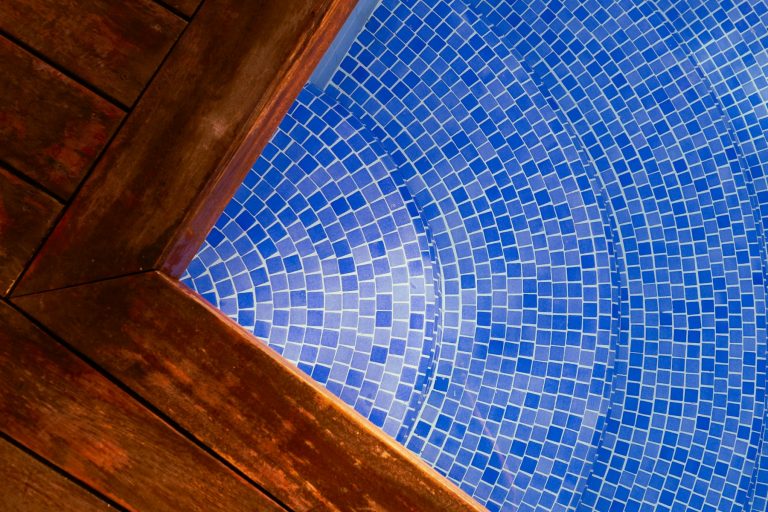
Start with a soil assessment, then choose the support, joints and drainage that suit the findings. The response is matched to the lot.
On soft ground, the pool may need engineered support beneath the shell so it does not rely on the upper soil alone. The deck is detailed with joints that allow small movements without cracking. Pipework is laid out to tolerate some shift.
Features that depend on a perfectly level edge need particular care on ground that moves. Our article on whether infinity edge pools are worth it describes one such feature and what it asks of a site.
Drainage ties it together. Soil that stays evenly moist moves less than soil that swings between soaked and dry, so directing roof and yard water sensibly protects the whole installation.
What Can Be Done for an Existing Pool That Has Settled?
Have it assessed first, since the right fix depends on what has moved and why. Many cases involve the deck and are straightforward to correct.
A settled deck can often be lifted, relaid or replaced, with better drainage and joints added at the same time. Coping and tile disturbed by movement can be reset. Structural movement of the shell is rarer and needs specialist evaluation.
A pool renovation is a good opportunity to correct the cause as well as the symptom, so the repair lasts.
How Do You Spot Movement Early?
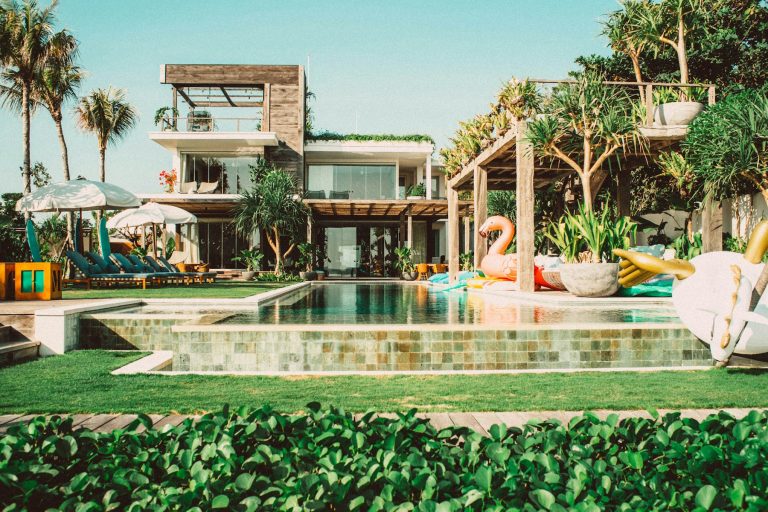
Watch the waterline, the joint between coping and deck, and any new cracks or gaps. Changes over time matter more than a single observation.
Useful things to look at a few times a year:
- Is the water an even distance below the tile all the way around?
- Has a gap opened or widened where the deck meets the coping?
- Are there new cracks in the deck, or old ones that have grown?
- Does water pool on the deck where it used to drain?
- Is the pool losing water faster than evaporation would explain?
Take a photo when you notice something so you can compare later. Early advice usually means a simpler fix.
If you are planning a new pool or worried about an existing one, request a free quote and we will begin with the ground.
Frequently Asked Questions
Why do pools in Louisiana settle?
The soil in much of the state is soft and holds a lot of water. It compresses under weight and moves as moisture changes, which affects anything built on it.
How much can a pool be out of level?
Small variations are common and often go unnoticed. If you can see an uneven waterline against the tile, have it assessed. A professional can tell you whether it is cosmetic or a sign of movement.
Do I need a soil test before building a pool?
It is strongly advisable on soft or previously filled ground. The results guide how the pool is supported and can prevent costly surprises.
Can a pool crack because of soil movement?
It can, though a properly supported shell is resilient. Decks and the joints around the pool are more likely to show movement first.
Why is my pool deck sinking and the pool is fine?
The deck and the shell are supported differently, so they can settle at different rates. It is one of the most common issues in this region and is usually repairable.
Do trees near a pool cause problems?
They can. Large trees change soil moisture and their roots can disturb decks and pipes. Their position should be considered in the design.
Does drainage affect settling?
Yes. Soil that stays evenly moist moves less. Good drainage around the pool and deck helps keep conditions steady.
Is one type of pool better for soft soil?
Each type can be built successfully with the right support. The soil assessment and the design matter more than the pool type alone.