To prepare a pool for hurricane season in New Orleans, keep it full, balance and sanitize the water, switch off power to the equipment, and clear the deck of anything the wind can lift. Leave the pool uncovered. Good preparation takes an afternoon, and a pool designed for storms makes it quicker still.
Key Takeaways
- Keep the pool full. Water in the pool protects the shell.
- Cut power to pool equipment at the breaker before the storm arrives.
- Store or secure furniture, toys and loose items from the deck.
- Leave the pool uncovered, since debris can damage a cover.
- Check equipment and water quality before switching anything back on.
Every summer, homeowners across the region ask what to do with the pool when a storm enters the Gulf. The answer is calmer than most expect. TurnKey Pool Designers works across the New Orleans metro, the Northshore and Baton Rouge, where storm preparation is part of owning a pool.
This guide covers the days before a storm, the clean-up after, and the design choices that make both easier. Follow official guidance for your household first. The pool comes after people.
What Should You Do to a Pool Before a Hurricane?
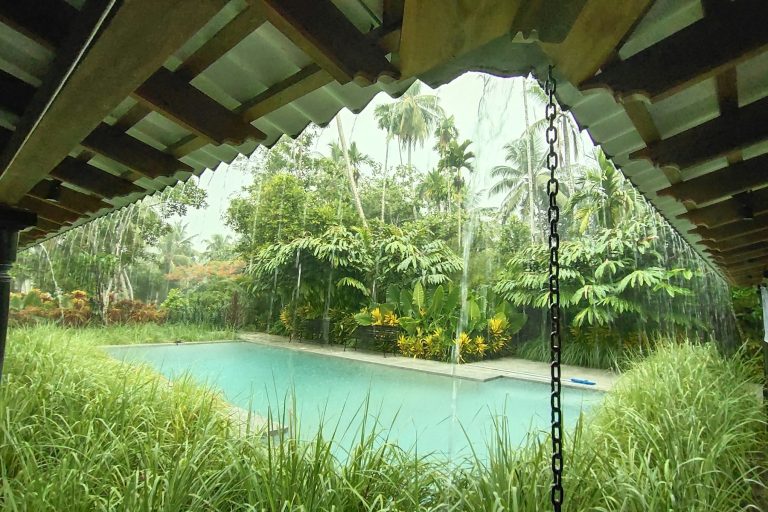
Leave the water in, treat it, turn the power off and clear the deck. Those four steps cover most of what a pool needs.
The instinct to drain the pool is the one to resist. Storms saturate the ground, and an empty shell in wet ground can shift or lift. A full pool holds itself in place.
Balance the water and add extra sanitizer ahead of the storm. Heavy rain and debris will dilute and contaminate it, and a well-treated pool recovers faster.
Trim back dead or overhanging branches earlier in the season, well before a storm is forecast. Branches are the most common cause of damage to decks, fences and screens, and the work is safer when there is no rush.
Switch off the breakers that serve the pump, heater, lighting and any automation. If flooding is likely, ask a professional whether exposed equipment can be protected or removed.
What Should You Move, Secure or Leave Alone?
Move anything light, secure anything that cannot be moved, and leave the water and the cover alone. The table gives a quick reference.
A few minutes with a camera is worth it too. Photos of the pool area before the storm help with any insurance conversation later.
If you would like a pool that is simpler to secure, request a free quote and ask about storm-minded design.
Should You Cover a Pool During a Storm?
No, leave it uncovered. Flying branches and debris can tear a cover, and a cover weighed down by rain and leaves is harder to deal with than an open pool.
Debris in the water can be skimmed and vacuumed out. A damaged cover has to be replaced. Covers earn their keep the rest of the year, and our guide to how pool covers improve energy efficiency explains where they make a difference.
How Do You Bring a Pool Back After a Hurricane?
Clear debris, inspect before restoring power, then clean and rebalance the water. Take it in that order and do not rush the electrical step.
Remove large debris by hand or with a net. Check the equipment pad for standing water, damage or displaced parts, and have a professional look at anything that was submerged before power is restored.
Once the system is running, clean the filter, brush and vacuum, test the water and bring it back into balance. Expect this to take several days after a serious storm.
Damage to finishes, tile or decking is worth documenting and assessing properly. A pool remodel can put right what a storm has worn and improve the design at the same time.
Which Design Choices Make a Pool Easier to Protect?
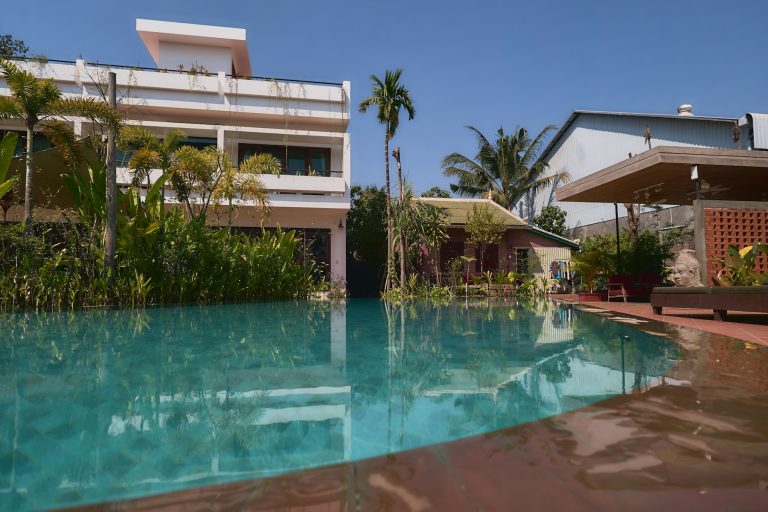
Raised equipment, good drainage, sturdy fixed features and sensible planting all reduce storm work. These are decisions for the design stage.
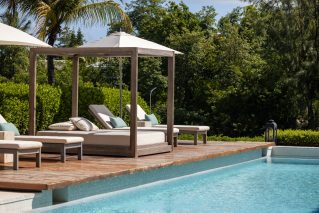
Equipment placed on higher ground or a raised pad is less exposed to flooding. A deck graded to shed water clears faster. Built-in seating and fixed shade structures engineered for wind mean fewer loose items to carry indoors.
Planting matters as well. Trees that overhang the pool are the main source of storm debris, so their position relative to the water is worth thinking about early.
Homeowners in Slidell and other communities close to open water often make storm readiness a priority in the brief. It is a reasonable thing to ask of any design in South Louisiana.
Frequently Asked Questions
Should I drain my pool before a hurricane?
No. Keep the pool full. The water’s weight holds the shell in place when the surrounding ground becomes saturated.
Should I lower the water level before a storm?
Generally leave it as it is. If you are unsure about overflow or drainage on your property, ask a pool professional before the storm.
Is it a good idea to use a tarp to cover a pool?
No. Tarps and covers can be torn or pulled in by wind and debris. An open pool is easier to clean up than a damaged cover.
Should I turn off my pool pump during a hurricane?
Yes. Switch off power to the pump and other equipment at the breaker before the storm arrives.
What do you put in a pool after heavy rain?
Test the water first. Rain dilutes sanitizer and shifts the balance, so the usual steps are to rebalance and add sanitizer as the test results indicate.
Do I need to shock my pool every time it rains?
A light shower rarely calls for it. After a heavy downpour or a storm that brings debris, testing and an extra dose of sanitizer are sensible.
Can I put patio furniture in the pool to protect it?
It is better to store furniture indoors. Items in the water can scratch the finish and are awkward to remove.
When is it safe to turn the pool equipment back on?
After the equipment has been inspected and is dry and undamaged. Anything that was under water should be checked by a professional first.