You design a pool for flooding and storm surge by raising what can be raised, giving water a planned route off the property, and choosing materials and equipment that recover well after being wet. No pool keeps floodwater out. A well-designed one comes through a flood with less damage and returns to use sooner.
Key Takeaways
- A flood-ready pool is designed to recover quickly. Keeping water out entirely is unrealistic.
- Equipment location is the single most valuable decision.
- Grading and drainage should be planned for the whole yard along with the pool.
- Durable finishes and decking shorten the clean-up.
- Keep the pool full during a flood and get professional advice afterwards.
Flooding is a fact of life across South Louisiana, whether from a tropical system or an afternoon of intense rain. A pool sits at the lowest point of most yards, so it deserves a plan. TurnKey Pool Designers works across the New Orleans metro, the Northshore and Baton Rouge, and flood behavior is part of how we read a lot.
This guide looks at what flooding does to a pool and the design choices that limit the damage.
What Does Flooding Do to a Pool?
Floodwater brings silt, debris and contamination into the pool, and it can damage equipment, decking and the ground around the shell. The pool structure itself usually fares best when it stays full.
Dirty water in the pool is unpleasant and fixable. The costlier problems are electrical equipment that has been submerged, decking undermined by moving water, and soil washed out from beside the shell.
Surge and rain behave differently. Rain arrives from above and drains away within hours on a well-graded lot. Surge pushes in from open water, can carry salt and sediment, and may stand for longer. Properties exposed to surge benefit most from raised equipment and durable finishes.
Rising groundwater adds upward pressure on the shell, which is why a pool should stay full through a flood. An empty pool in saturated ground is at far greater risk than a full, dirty one.
Which Design Choices Limit Flood Damage?
Raise the equipment, grade the yard to move water away, and select materials that tolerate a soaking. Each choice reduces what you have to repair.
Pumps, heaters, control panels and electrical connections are the most vulnerable items on the property. Placing them on the highest practical ground, or on a raised platform, keeps them out of shallow floodwater.
The pool’s own elevation matters as well. Setting the pool and deck slightly above the surrounding yard, where the lot allows it, means ordinary heavy rain drains away from the water.
These choices are far easier to build in than to add later. A custom pool design weighs them against how you want the yard to look and feel.
How Should the Yard Drain Around a Pool?
Water should have a clear, planned path from the house and the pool to a safe discharge point. The pool, deck and lawn are designed as one drainage system.
A common mistake is a pool project that blocks the yard’s natural drainage path with a new wall, deck or raised bed. A good design checks where water flows today and keeps that route open or improves it.
In St. Rose and other communities where heavy rain can collect quickly, drainage is often the first thing a site visit looks at.
Which Materials Cope Best After a Flood?
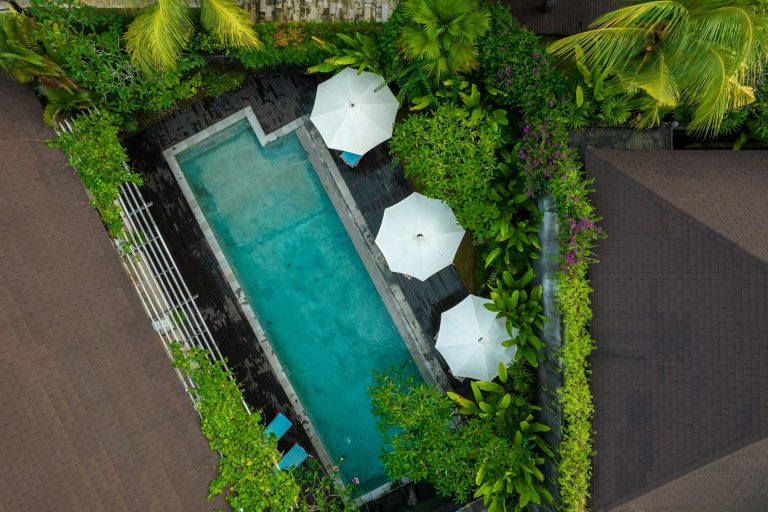
Dense, non-porous finishes and decking that can be pressure-washed and will not hold moisture recover best. Soft or absorbent materials take longer and may stain.
Around the pool, look for decking that keeps its grip when wet and cleans easily. Fixed features built from masonry or other durable materials outlast lightweight ones in moving water.
For furniture and fittings, anything that can be lifted and stored is safer than something that must stay out. Built-in storage near the pool makes that quicker.
If flooding is a concern on your property, request a free quote and we will look at how water moves across the lot.
What Should You Do With the Pool After a Flood?
Keep it full, stay out of the water, and have the equipment inspected before restoring power. Clean-up follows once the system is safe to run.
Do not drain the pool to get rid of dirty water. The ground is at its wettest right after a flood, and that is when an empty shell is most at risk. Floodwater in the pool is treated and filtered clean in stages, with professional help for anything severe.
Remove debris, clean the filter often, and expect the water to take time to clear. Have decking and surrounding soil checked for movement or washout.
Outdoor living areas need the same thought. Our guide to incorporating an outdoor kitchen near your pool is a useful companion when planning features that should stand up to weather.
Frequently Asked Questions
Can a pool be designed to resist flooding?
A pool can be designed to limit flood damage and recover faster. Raised equipment, good drainage and durable materials make the biggest difference.
Should I drain my pool before or after a flood?
No. Keep it full. Saturated ground pushes upward on the shell, and the water inside counters that pressure.
Will floodwater ruin my pool?
Rarely. The water becomes contaminated and needs thorough cleaning and treatment. Equipment and decking are more likely to need repair than the pool shell.
Where should pool equipment go on a flood-prone lot?
On the highest practical ground, or on a raised platform. Ask your designer how high floodwater has reached on the property in the past.
Do I need to shock my pool every time it rains?
Ordinary rain seldom requires it. After very heavy rain or any flooding, test the water and treat it according to the results.
Does a raised pool deck help with flooding?
It can. A pool and deck set a little above the yard keep everyday runoff out of the water. It will not stop a major flood.
Is it safe to swim after a flood?
Only once the water has been cleaned, treated and tested, and the equipment has been inspected. Floodwater can carry contaminants.
Does flood risk affect what pool I can build?
It influences the design more than the pool type. Elevation, drainage and equipment placement are adjusted to suit the lot.